
News16. Nov. 20264 min
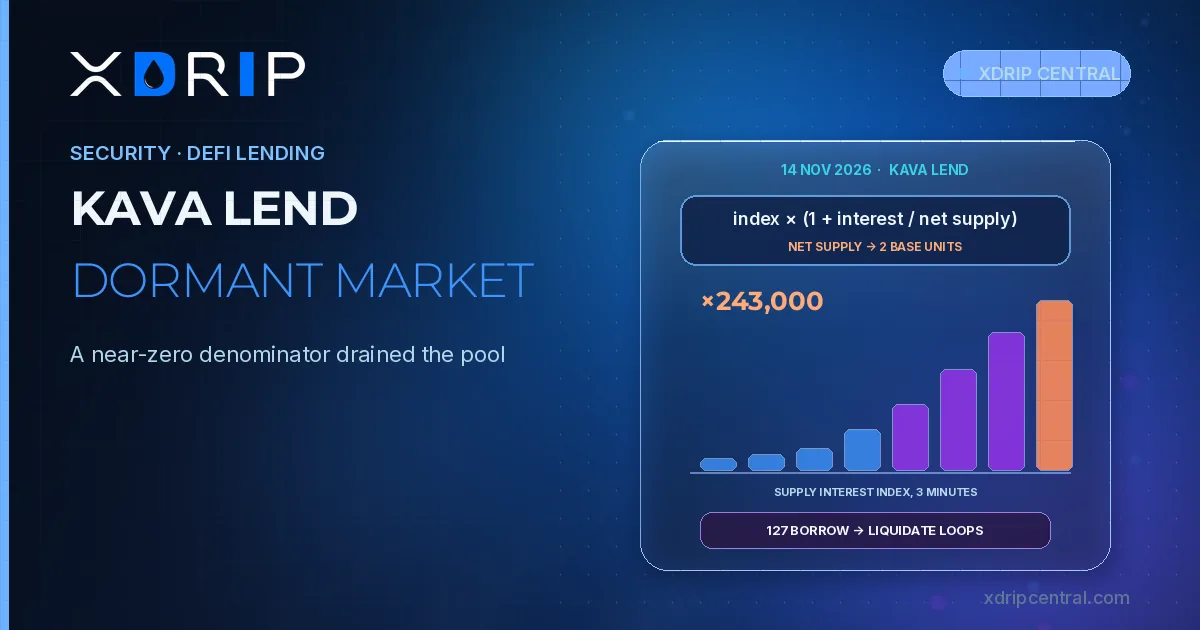
Kava Lend Drained Through a Dormant BUSD Market
An interest-index flaw in Kava Lend's near-empty BUSD market let an attacker borrow about 55M KAVA. What the code did, what is known and what is not.
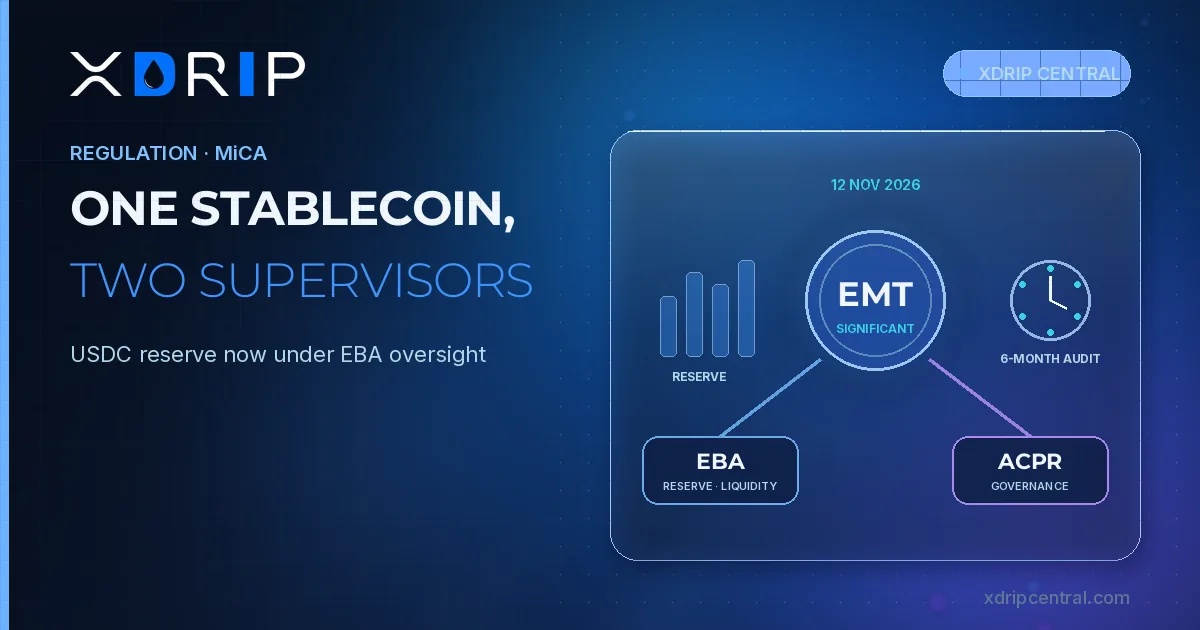
From today, 12 November 2026, the European Banking Authority (EBA) directly supervises the parts of USDC that matter most to holders: the reserve behind the token, the issuer's own funds, its liquidity and its recovery and redemption plans. USDC, issued in the EU by Circle Internet Financial Europe SAS, is the first e-money token (EMT) the EBA has classified as "significant" under the Markets in Crypto-Assets Regulation (MiCA). No rule changed overnight. What changed is who checks the reserve.
On 14 October the EBA announced the classification. Of the 45 EMTs notified under MiCA so far, USDC is the first to be labelled significant. The EBA said dual supervision would start on 12 November. An EMT is a crypto-asset that references a single official currency, such as the euro or the US dollar.
Under the split the EBA described, supervision of own funds, the reserve of assets, liquidity requirements and recovery and redemption plans moves from France's Autorité de Contrôle Prudentiel et de Résolution (ACPR) to the EBA. The ACPR keeps governance, qualifying holdings, fit-and-proper assessments, outsourcing and conflicts of interest. The EBA has also signed a memorandum of understanding with the New York State Department of Financial Services, because the same token is issued in the US by Circle Internet Financial, LLC.
The test is set out in Article 43 of MiCA and applied to EMTs by Article 56. A token is significant when at least three criteria are met. The quantitative ones include more than 10 million holders, more than EUR 5 billion in issued value, market capitalisation or reserve size, and more than 2.5 million transactions and EUR 500 million in value per day on average. Others concern international use for payments and links with the financial system. The EBA has not said publicly which criteria USDC met, and it reassesses the classification every year.
For an e-money institution, Article 58 adds a set of obligations once a token is significant:
Known: the start date, the division of tasks between the EBA and the ACPR, the legal basis and the cooperation agreement with New York's regulator. Circle has told US investors in an SEC filing that its French subsidiary may face higher capital, reserve, liquidity and other prudential requirements, and that it is evaluating the impact.
Unknown: what, if anything, Circle has to change in practice, and how the EBA will exercise its new oversight in its first review cycle. Neither has been published.
As XDRIP Digital Management LLC, we see this as an operational milestone for MiCA, not a verdict on USDC. Being significant does not mean a regulator found a problem. It means the token is large enough that its reserve is now checked at EU level rather than only nationally. Redemption at par was already a MiCA requirement for every EMT, and this does not turn USDC into a bank deposit.
For anyone holding or integrating a regulated stablecoin, the practical points are the six-monthly reserve audits and the custody-access rule. The audits make the backing easier to check, and the custody rule gives holders more choice in where the token can be kept. As with any stablecoin, we suggest keeping track of the issuer's published reserve reports rather than relying on secondary summaries.
News16. Nov. 20264 min
An interest-index flaw in Kava Lend's near-empty BUSD market let an attacker borrow about 55M KAVA. What the code did, what is known and what is not.
News13. Nov. 20264 min
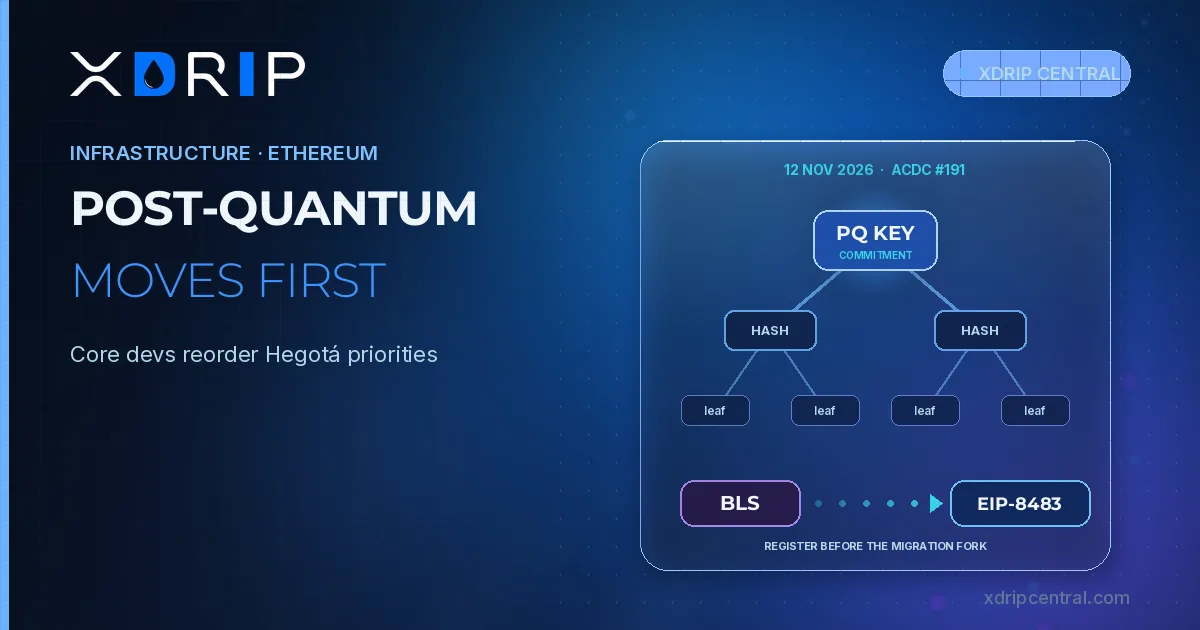
At ACDC #191 Ethereum devs withdrew Quick Slots and moved EIP-8483 post-quantum key registration toward Hegotá. What it does and what is still undecided.
News4. Nov. 20265 min
Signing and finality lessons on Central, backup guidance on xdrip.io, open firmware on Xdripia Waves and two new Seventh Amulet Dev Logs.