
Sicurezza11 nov 20264 min
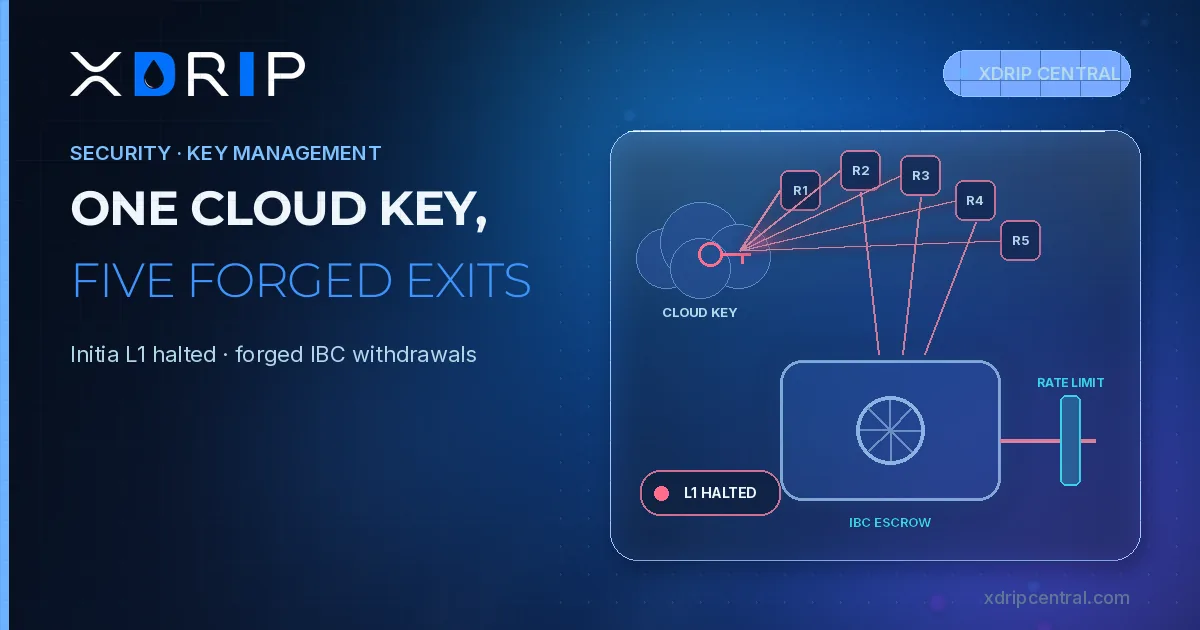
Initia Halts L1 After Cloud Key Opens Bridge Escrow
A leaked GCP key let an attacker forge IBC withdrawals from five Initia rollups and move $3.27M from L1 escrow. What happened, and what is still unknown.
On Monday, 16 November 2026, about 10.39 million USDC left the Ethereum contract of Lighter, a perpetual futures exchange that runs on its own zero-knowledge rollup on Ethereum. Lighter's protocol, smart contracts and official SDKs were not breached. The attacker did not phish anyone or break into a server either. According to Lighter's own post-incident write-up, the private API keys of the affected trader could be calculated from public data, because the trader's custom signing code had been reusing signing nonces.
Blockscout shows a withdrawal of 10,393,056 USDC from the Lighter contract at 10:11 UTC to the address 0xb3fffca23d4444ee73349825acd84f7b5020e387. Bitquery traced most of it being swapped for ETH through CoW Swap within minutes. It then followed 1,920 ETH through 12 wallets of 160 ETH each, routed via LI.FI to Hyperliquid, where those accounts bought about $3.46 million of XMR1, a Hyperliquid-traded token named after Monero. By Bitquery's snapshot at 11:55 UTC, another 3,845 ETH was still in the original wallet.
Lighter suspended withdrawals at 11:02 UTC. Its smart contract Guardian, a safety mode, was triggered by the anomaly and paused withdrawals, which let the Lighter Security Council return about 5 million USDC to the affected trader. Lighter published its write-up at 18:20 UTC and reopened deposits and withdrawals the same evening.
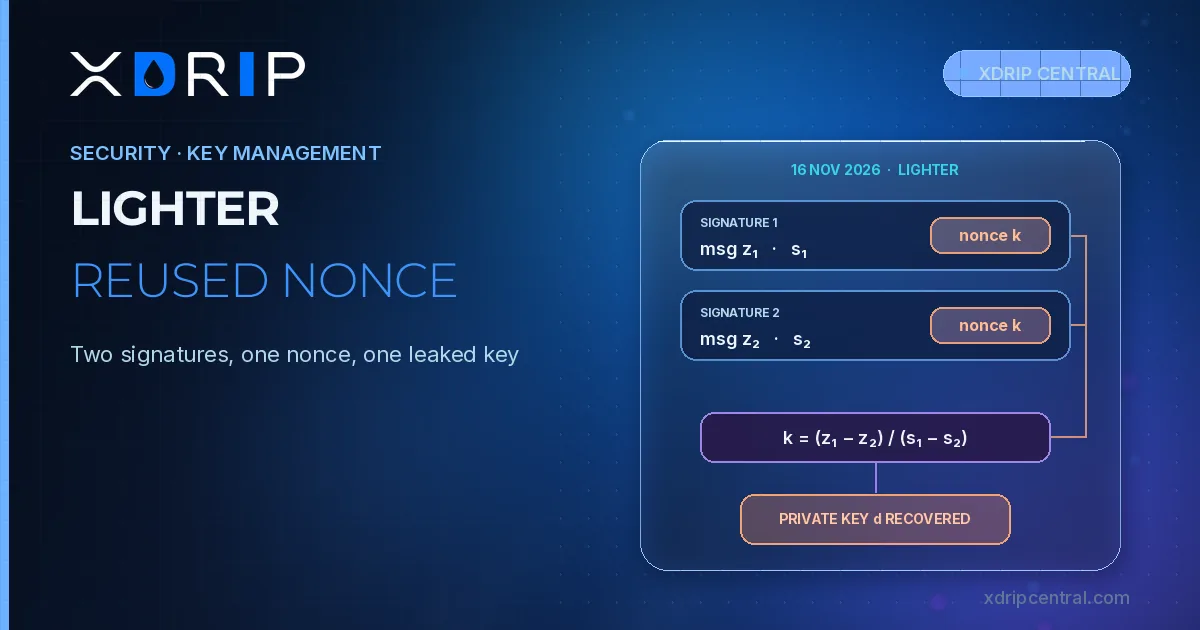
On Lighter, every transaction is authorised by a signature from an API key, and those signatures were public. Each signature uses a one-off value, the nonce, which must be unique and unpredictable. With ECDSA, the scheme Bitcoin and Ethereum also use, a signature is s = k⁻¹(z + r·d), where k is the nonce, z the message hash and d the private key. If the same key signs two different messages with the same k, the two equations share two unknowns and can be solved: k = (z₁ − z₂) / (s₁ − s₂), then d = (s·k − z) / r. No access to the account or to Lighter's systems is needed, only two public signatures.
Lighter says the affected accounts signed with code other than its official SDKs, and that this code reused nonces. The official SDKs generate every nonce with a cryptographically secure random number generator.
A Lighter API key cannot withdraw to someone else's wallet. It can, however, move funds to the account's own sub-accounts, and a public pool created by the account counted as one. With the leaked key, the attacker created a public pool from the victim's account, minted pool shares from a separate account under their control, transferred the victim's funds into the pool without minting new shares, which raised the value of the attacker's shares, then redeemed and withdrew.
Neither step on its own is a protocol bug. Together they turned a key that was only meant to trade into a withdrawal path.
A wallet signature is now required to move funds into a public pool, so an API key alone can no longer do it, and API key signatures are no longer public. Lighter says it is adding IP allowlists for API keys, per-key permissions and limits on actions and markets, and monitoring for nonce reuse, and that it will contact affected accounts and void their keys.
Known: the withdrawal transaction, the attacker address, the route through CoW Swap, LI.FI and Hyperliquid, the cause Lighter gives and the fixes it has shipped. Not known: a final loss figure from Lighter, which signing code reused nonces, and whether other accounts were exposed the same way. Some researchers put potential losses at $15.5 million across two market-maker accounts; Lighter has not confirmed that figure. Bitquery saw similar routes after a separate Safe wallet theft the same day and after the Kava Lend exploit two days earlier, and itself cautions that similar routes alone are weak evidence of a common attacker.
Our reading is that this was a failure at the edge, not at the core. Nonce reuse is a weakness documented for well over a decade, and it still works because trading bots and agents increasingly carry their own signing code. For programmatic traders, the practical points are narrow: sign with audited libraries, never derive a nonce from a timestamp, a counter, a weakly seeded generator or the message contents unless the library implements deterministic nonces to RFC 6979, and rotate any key that may have signed with a repeated nonce. For venues, a key scoped to trading should not be able to reach a path that ends in a withdrawal, and signatures do not need to be public to be verified.
Sicurezza11 nov 20264 min
A leaked GCP key let an attacker forge IBC withdrawals from five Initia rollups and move $3.27M from L1 escrow. What happened, and what is still unknown.
Sicurezza10 nov 20264 min
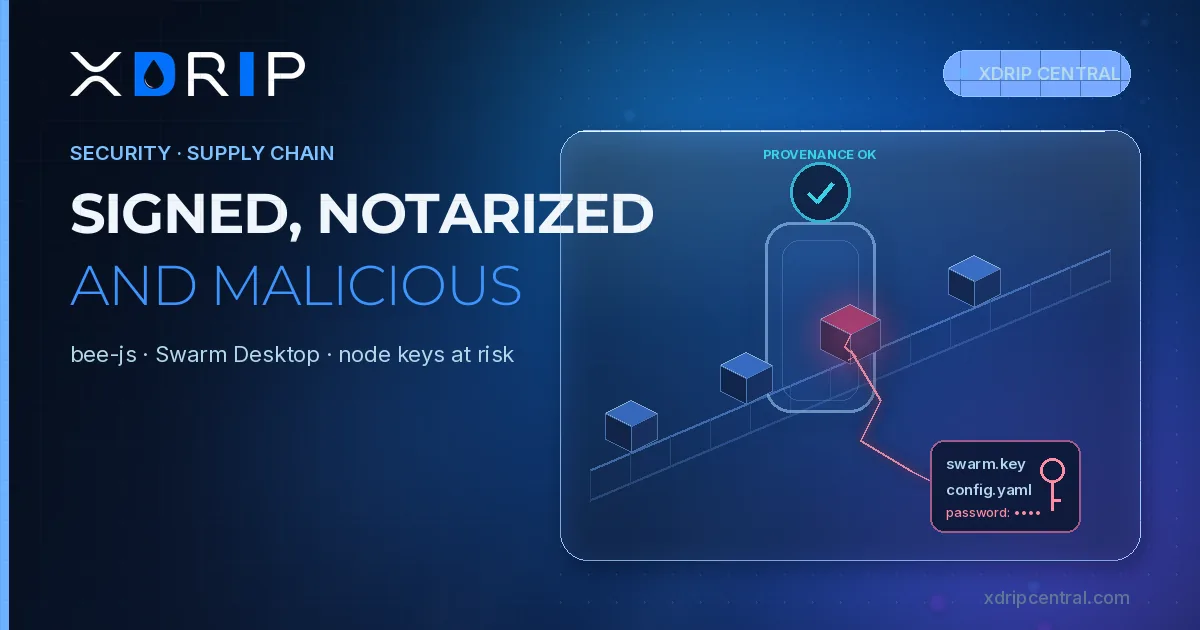
Malicious bee-js 13.3.0 and Swarm Desktop 0.56.2 shipped through Swarm's own signed pipeline, targeting node wallet keys. What is known and unknown.
Sicurezza9 nov 20264 min
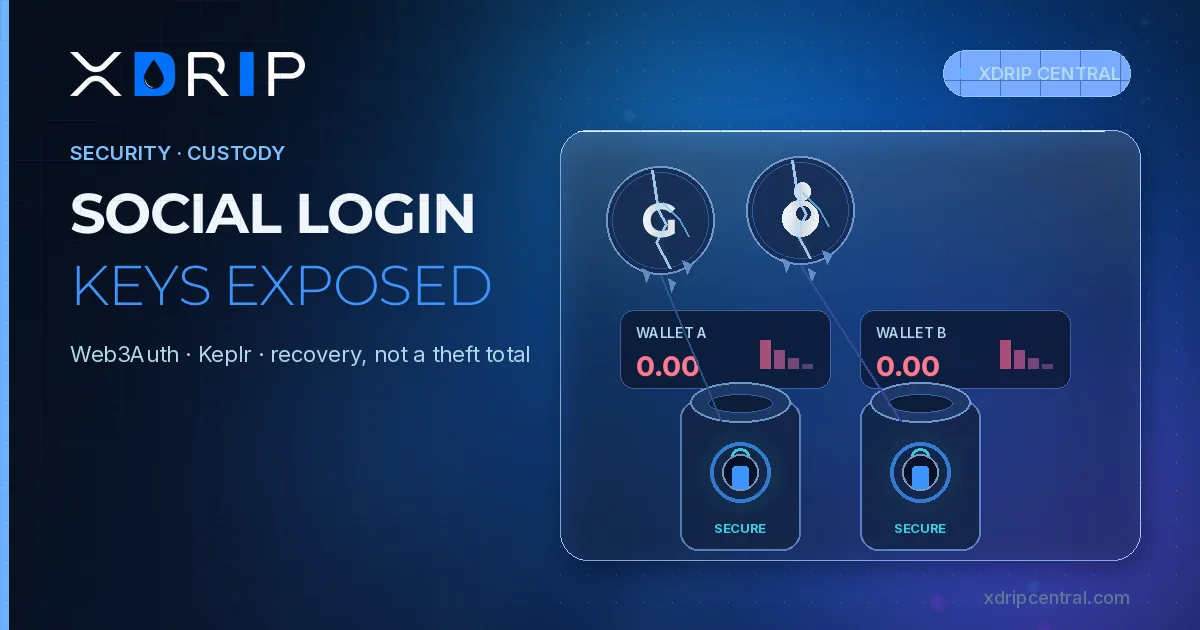
Web3Auth paused embedded wallets after a flaw exposed Keplr Google/Apple login keys. Millions moved to recovery addresses, not a theft total.