
SecurityNov 10, 20264 min
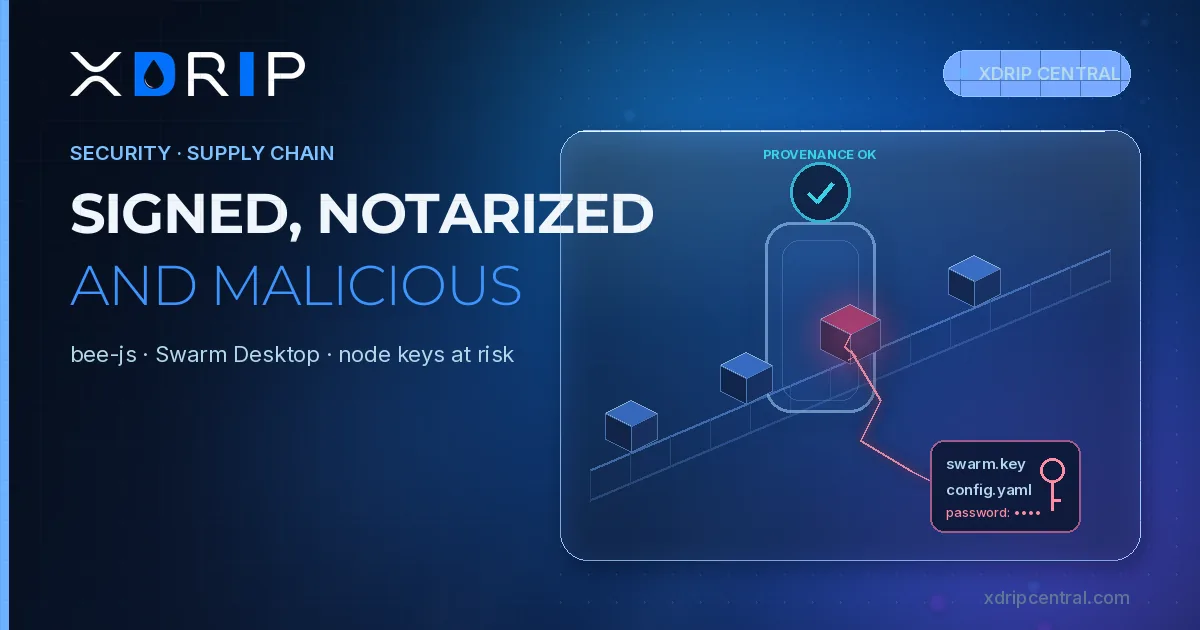
Swarm Release Pipeline Hijacked to Target Node Keys
Malicious bee-js 13.3.0 and Swarm Desktop 0.56.2 shipped through Swarm's own signed pipeline, targeting node wallet keys. What is known and unknown.
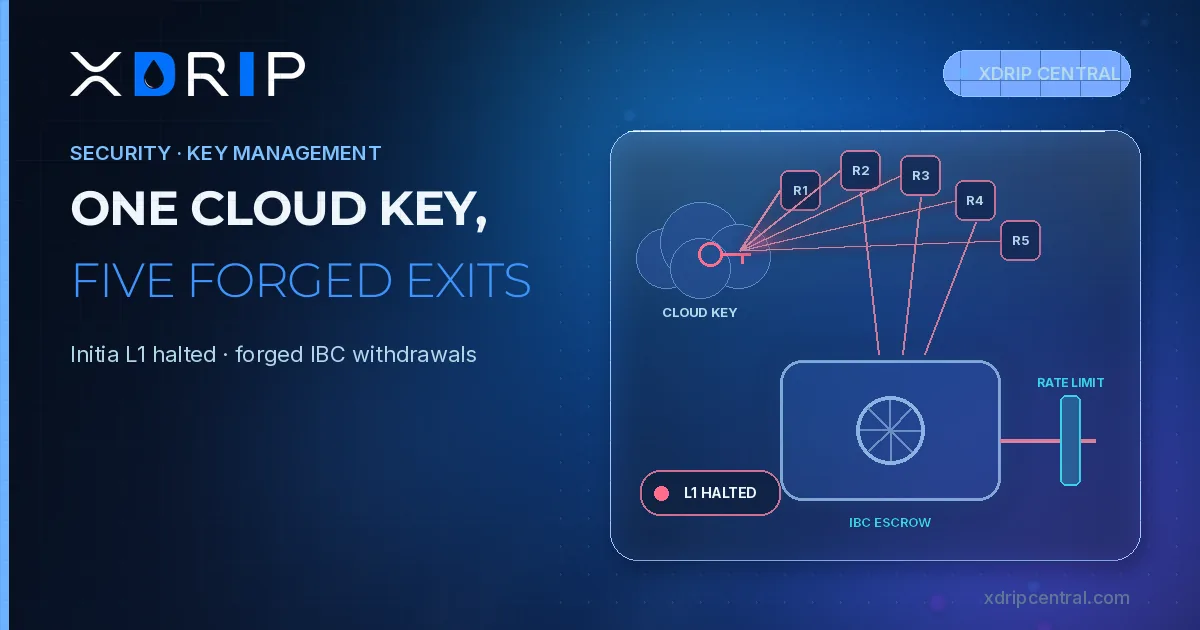
On 10 November 2026 at 06:18 UTC, Initia halted its layer 1 in coordination with its validators after unauthorized transfers drained the escrow accounts that back assets bridged to its rollups. No smart contract was broken. According to Initia's own account, the attacker moved from a leaked cloud credential to the infrastructure that signs rollup withdrawals, and the L1 accepted forged withdrawals as valid.
Initia is a Cosmos-based layer 1 that connects a network of rollups. Tokens bridged to a rollup are locked in IBC escrow accounts on the L1, and they are released when a rollup reports a valid withdrawal. IBC is the protocol Cosmos chains use to move tokens between each other.
The first public sign came at 19:30 UTC on 9 November, when Initia said it was investigating "an issue affecting rollup infrastructure", had asked rollups to pause, and had not identified any impact to user funds. The L1 stayed live overnight. At 07:07 UTC on 10 November, Initia announced the halt and said "compromised rollup infrastructure keys" had been used to fabricate IBC transfers. Its preliminary count was about $605,000 in USDC leaving through Noble, plus about $10,000 in other tokens. CertiK separately reported about $636,000 in outflows across 16 IBC transfers to Noble.
Initia published a fuller account at 16:43 UTC. It says that on 9 November the attacker used a command injection attack with a compromised Google Cloud (GCP) key used for provisioning private nodes. That exposed environment variables, which gave access to Initia's GitHub and GCP accounts and to further credentials. Those credentials opened Anvil, the hosting platform rollups on Initia run on. From there, the attacker was able to validate forged IBC withdrawals from five rollups and unlock the assets held in the L1 escrow accounts.
The chain did what it was built to do. The escrow trusts the rollup's signed withdrawal, and the keys behind those signatures were in the attacker's hands.
Initia's updated figures are larger than its first estimate, because they count what was moved, not only what left the chain. About $3.27 million in assets reached the attacker's address on the L1, and $2.16 million of that is still there on the paused chain, where it cannot be moved. The attacker sold assets on the Initia DEX and withdrew 13,400 TIA, 8,000 USDC.inj and 597,000 Noble USDC before hitting Initia's outbound IBC rate limits. Initia says no INIT was withdrawn.
Known: the halt time, the entry path as Initia describes it, that five rollups were affected, the amounts above, and Initia's statement that it intends to "restore the backing of affected assets in full". Initia says asset recovery is under way with law enforcement and security partners.
Unknown: how the GCP key was first compromised, which rollups were affected, the recovery plan's details and a restart date. Initia is rebuilding the affected infrastructure from scratch in an isolated environment and expects this to take longer than a routine restart. Secondary reports note that this is Initia's second L1 halt in under three weeks, after a separate incident on 23 October with a different root cause.
As XDRIP Digital Management LLC, we read this as a key-management failure, not a protocol failure. A bridge escrow is only as strong as the keys that can authorize a release. Here, those keys sat behind cloud accounts, environment variables and a hosting platform, each reachable from the one before.
Two controls limited the damage: the outbound IBC rate limits and a coordinated halt that froze most of the moved funds on-chain. For operators, the lesson is plain. Keys that can release pooled user assets need their own isolated signing environment, least-privilege access and monitoring, kept apart from routine node provisioning. For users, Initia's advice stands: use only its official channels and ignore unofficial "recovery" offers.
SecurityNov 10, 20264 min
Malicious bee-js 13.3.0 and Swarm Desktop 0.56.2 shipped through Swarm's own signed pipeline, targeting node wallet keys. What is known and unknown.
SecurityNov 9, 20264 min
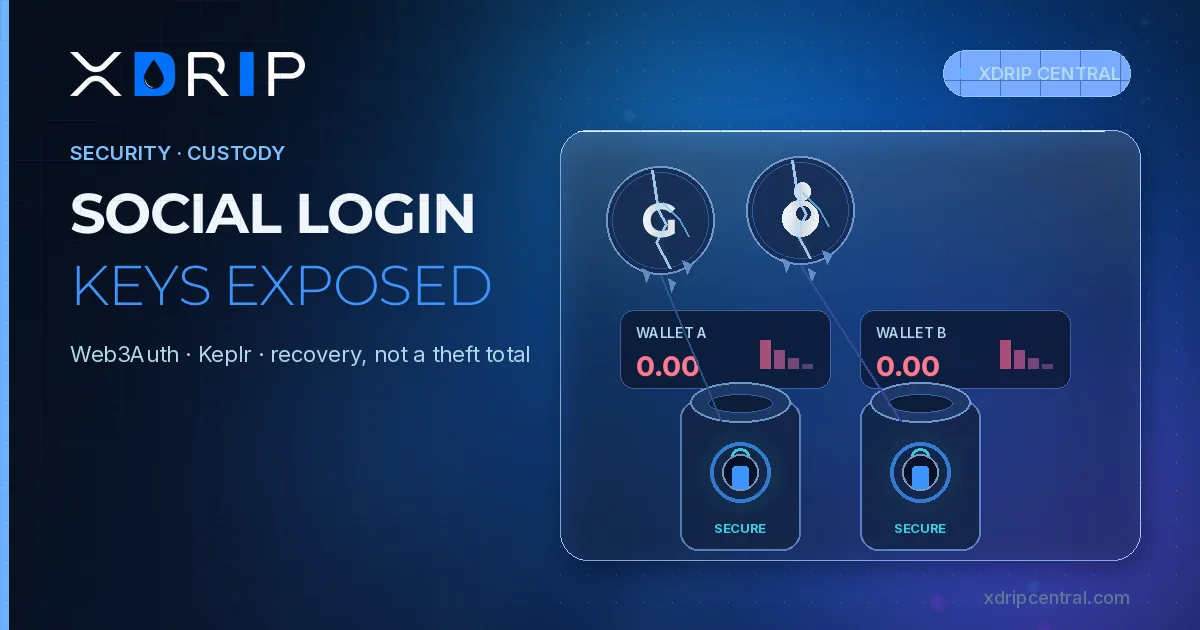
Web3Auth paused embedded wallets after a flaw exposed Keplr Google/Apple login keys. Millions moved to recovery addresses, not a theft total.
SecurityNov 6, 20264 min
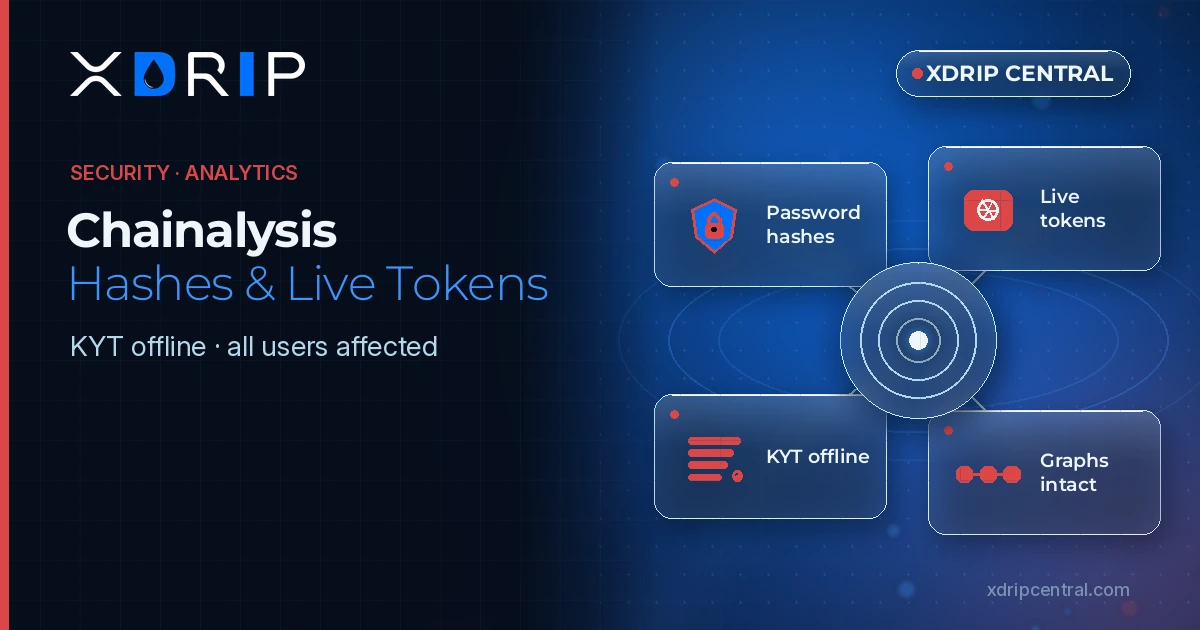
Chainalysis says password hashes and live tokens for all users were exposed. KYT went offline after abnormal activity. What the firm disclosed.