
News16 nov 20264 min
Kava Lend Drained Through a Dormant BUSD Market
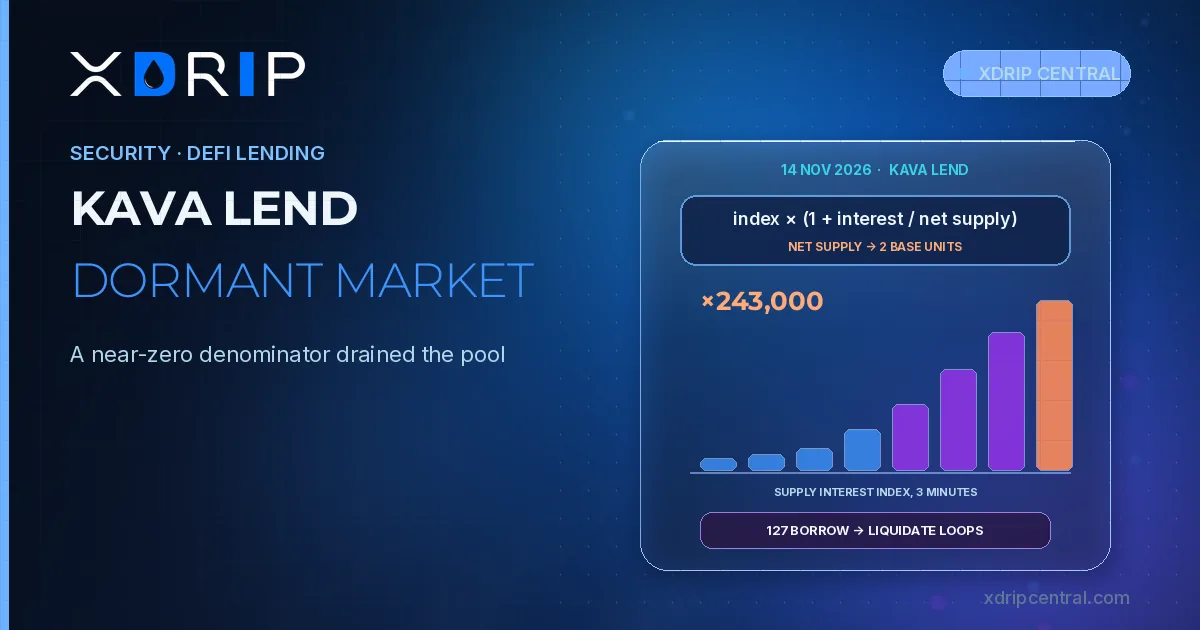
An interest-index flaw in Kava Lend's near-empty BUSD market let an attacker borrow about 55M KAVA. What the code did, what is known and what is not.
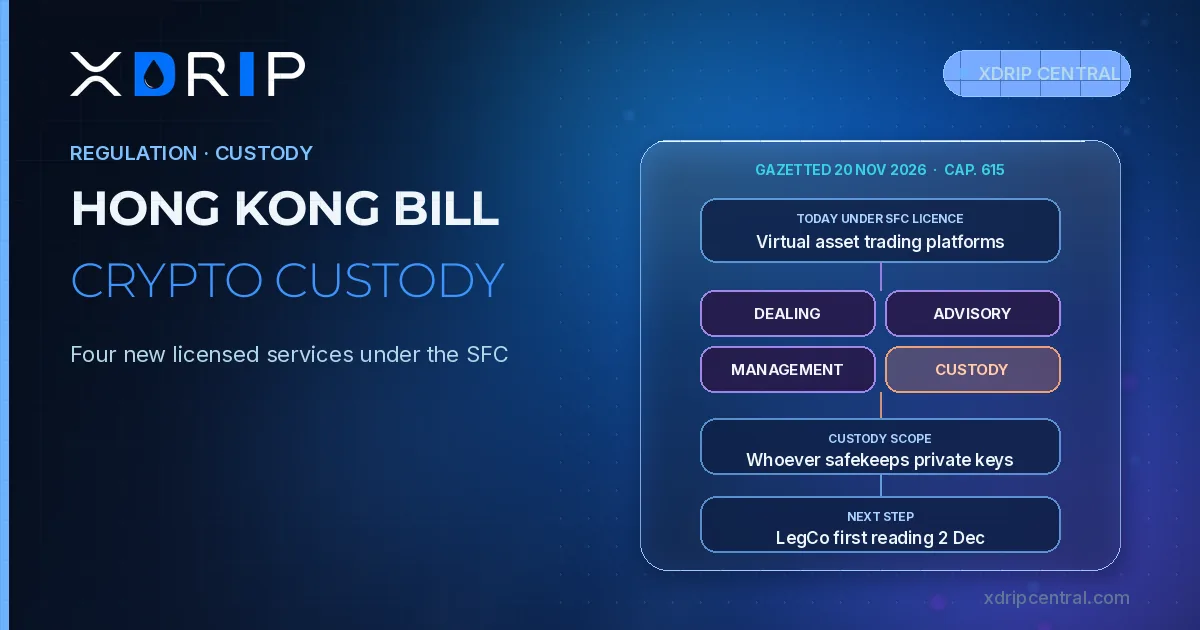
On 20 November 2026 the Hong Kong government published the Virtual Asset Services Legislation (Amendment) Bill 2026 in the Gazette. If enacted, it would bring four more kinds of crypto business under the Securities and Futures Commission (SFC): dealing, advisory, management and custody. For anyone who holds private keys on behalf of clients, the custody part is the most concrete change.
The bill amends the Anti-Money Laundering and Counter-Terrorist Financing Ordinance (Cap. 615), the law that already requires virtual asset trading platforms to be licensed. According to the government's release, any person carrying on a business of virtual asset dealing, advisory, management or custody services in Hong Kong would need to be licensed by or registered with the SFC and pass a fit-and-proper test. Banks and stored value facility licensees supervised by the Hong Kong Monetary Authority (HKMA) would also have to register with the SFC before offering any virtual asset service. The bill is due for its first reading in the Legislative Council on 2 December.
The text follows public consultations run by the Financial Services and the Treasury Bureau and the SFC since June 2025. Their December 2025 conclusions on custody describe how the regime is meant to work:
Known: the four service types, the SFC as licensing authority, the inclusion of HKMA-supervised banks and stored value facility licensees, and the first reading date. Not known: the commencement date, which the government release does not give, and the final detailed requirements. The custody conclusions note that consultation respondents asked for clear rules on hot and cold storage ratios, insurance, private key management, independent audits and disaster recovery. The SFC said it would take that feedback into account; it did not commit to specific ratios for custodians. We have relied on the government release and the consultation conclusions; details in the bill text and later SFC guidance may differ, and the Legislative Council can still amend the bill.
Our reading: the custody scope draws the line where the risk sits. It is defined by who controls the keys, not by what a firm calls its product. This matches the practical distinction we see in our own work: if a provider can move your assets unilaterally, you are trusting its key management, its access controls and its incident response. If you hold the key material yourself, or can reconstruct it on your own, that dependency changes.
For service providers, the absence of a deeming period means the commencement date will decide who can keep serving Hong Kong clients without interruption. The SFC has asked existing custodians to start pre-application talks early. For users, the regime would give a clearer way to tell regulated custodians from unregulated ones, while the technical controls behind each licence remain to be specified.
We will follow the bill through the Legislative Council and report on the commencement date and the SFC's custody requirements once they are published.
News16 nov 20264 min
An interest-index flaw in Kava Lend's near-empty BUSD market let an attacker borrow about 55M KAVA. What the code did, what is known and what is not.
News13 nov 20264 min
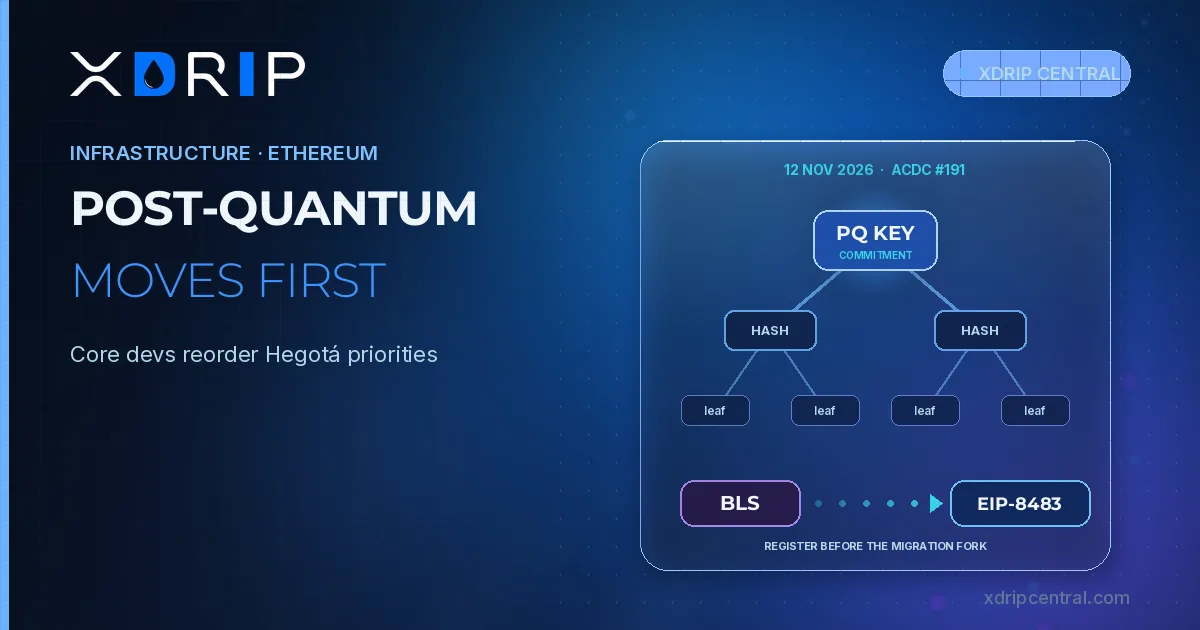
At ACDC #191 Ethereum devs withdrew Quick Slots and moved EIP-8483 post-quantum key registration toward Hegotá. What it does and what is still undecided.
News12 nov 20264 min
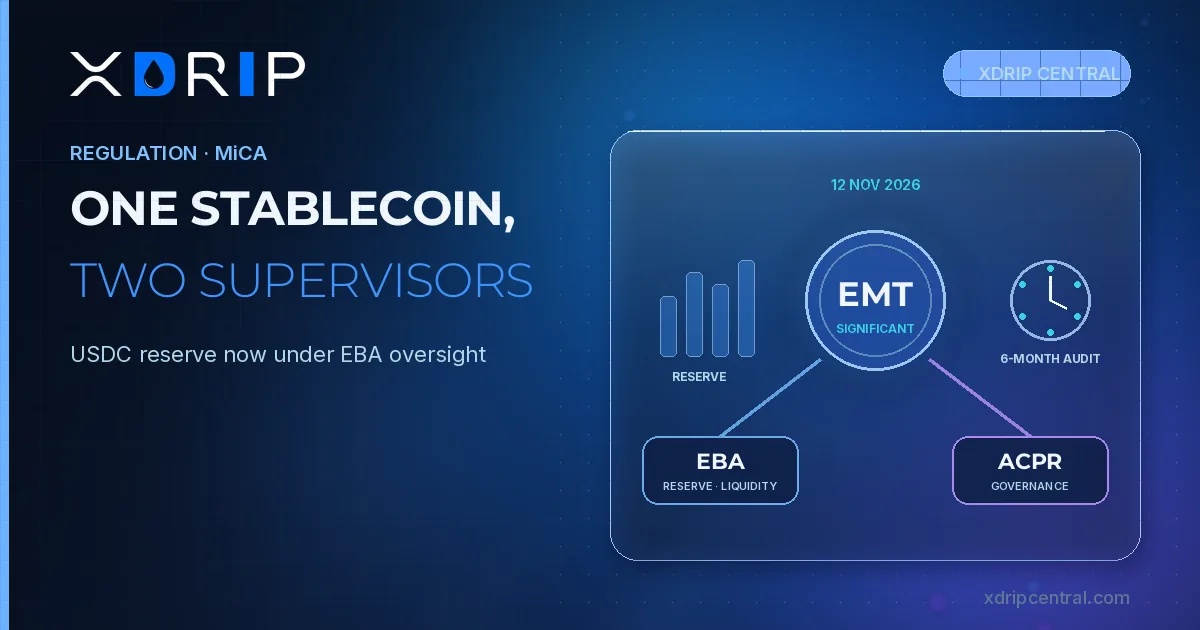
From 12 November the EBA directly supervises USDC's reserve, own funds and liquidity under MiCA. What changes, what stays with France's ACPR, what is unknown.