
NewsNov 16, 20264 min
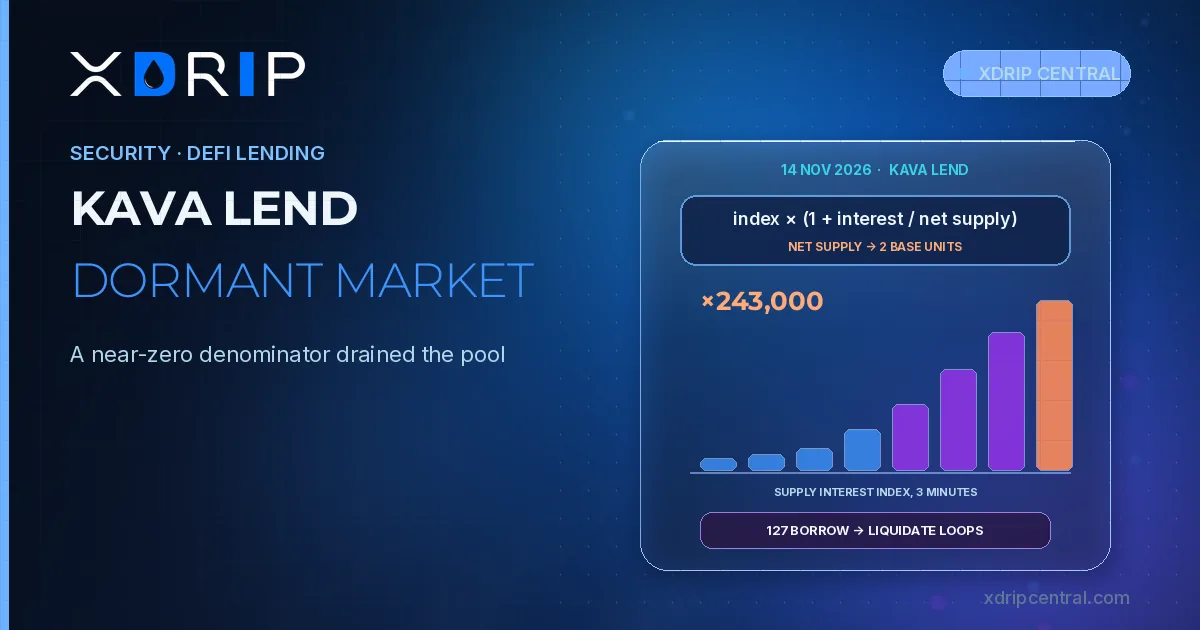
Kava Lend Drained Through a Dormant BUSD Market
An interest-index flaw in Kava Lend's near-empty BUSD market let an attacker borrow about 55M KAVA. What the code did, what is known and what is not.
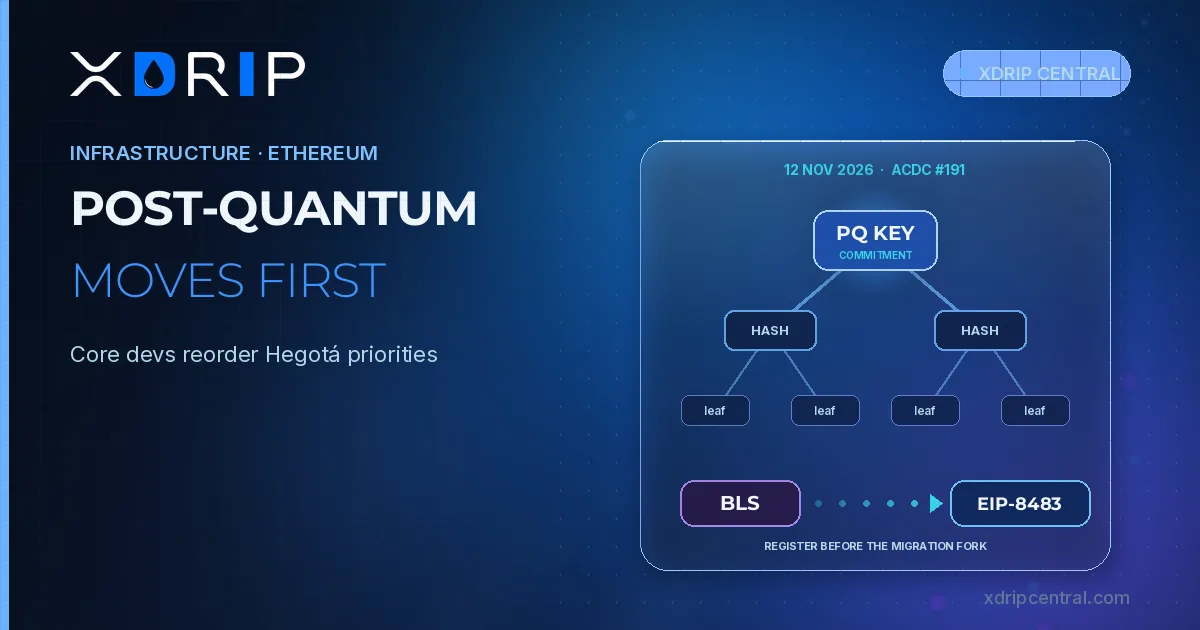
On Thursday, 12 November 2026, Ethereum's consensus-layer developers spent most of All Core Devs Consensus (ACDC) call #191 on one question: how urgent is the post-quantum problem, and what should the next upgrade, Hegotá, give up to address it? The answer was visible in two scoping decisions. A proposal to shorten slots was withdrawn by its own champion, and a proposal that lets validators pre-register post-quantum key material was moved to Proposed for Inclusion. Nothing has shipped and no fork date changed. What changed is the order of priorities.
The call followed the Devcon L1 R&D workshop, where researchers discussed both quantum and AI-driven threats to the elliptic-curve and BLS cryptography Ethereum relies on today. According to the official meeting summary, participants discussed raising the internal urgency level from "DEFCON 4" to "DEFCON 2-3".
Three outcomes matter:
Two follow-ups were assigned in the meeting notes. The Ethereum Foundation is to publish, in the coming weeks, the findings of its investigation into current cryptographic breaks or threats, whatever the outcome. And work continues to make leanVM, the proving system for post-quantum signature aggregation, ready for client testing in a few months, with a production-readiness goal in January.
The draft, authored by Potuz and Justin Traglia, adds a new execution-layer request and a predeploy contract. The execution address in a validator's withdrawal credentials can commit 64 bytes of opaque post-quantum material for that validator, which the consensus layer stores in the beacon state. Builders get a separate request with 32 bytes. The intended use is a commitment to a hash-based public key plus VRF data, but the EIP deliberately gives the bytes no meaning: a later migration fork will choose the signature scheme.
The design reasoning is the interesting part. Once a quantum adversary is credible, a BLS signature no longer proves who sent a message, including a message announcing a new post-quantum key. A migration is only safe if every validator commits to its new material beforehand, through a channel that does not depend on BLS. The withdrawal address is that channel: it already owns the stake and already authorises withdrawals and consolidations. Later registrations overwrite earlier ones, so owners can rotate or correct material before the migration fork. Validators that still use 0x00 BLS withdrawal credentials cannot register until they switch to an execution address.
Known: the scoping decisions above, the EIP text and the open action items. Not known: which post-quantum signature scheme Ethereum will adopt, when Hegotá ships, whether EIP-8483 survives final scoping, and what the Foundation's cryptographic review will report. The "Q-Day" estimates cited during the discussion are projections, not evidence of a working attack, and we do not treat them as such.
For anyone operating keys, the useful signal is that Ethereum is building the migration path before the cryptographic break, not after it. In the GitHub agenda thread, one client developer argued for a hybrid transition in which validators sign with both BLS and a post-quantum scheme, with BLS staying authoritative until post-quantum aggregation is proven at mainnet scale. That debate is still open.
Our practical reading is narrow. Staking operators should know where their withdrawal credentials sit and who controls that address, because under this proposal that address, not the node operator's BLS key, decides the post-quantum commitment. Wallet and custody teams should plan for a key format that has not yet been chosen. The next ACDC call is scheduled for 26 November.
NewsNov 16, 20264 min
An interest-index flaw in Kava Lend's near-empty BUSD market let an attacker borrow about 55M KAVA. What the code did, what is known and what is not.
NewsNov 12, 20264 min
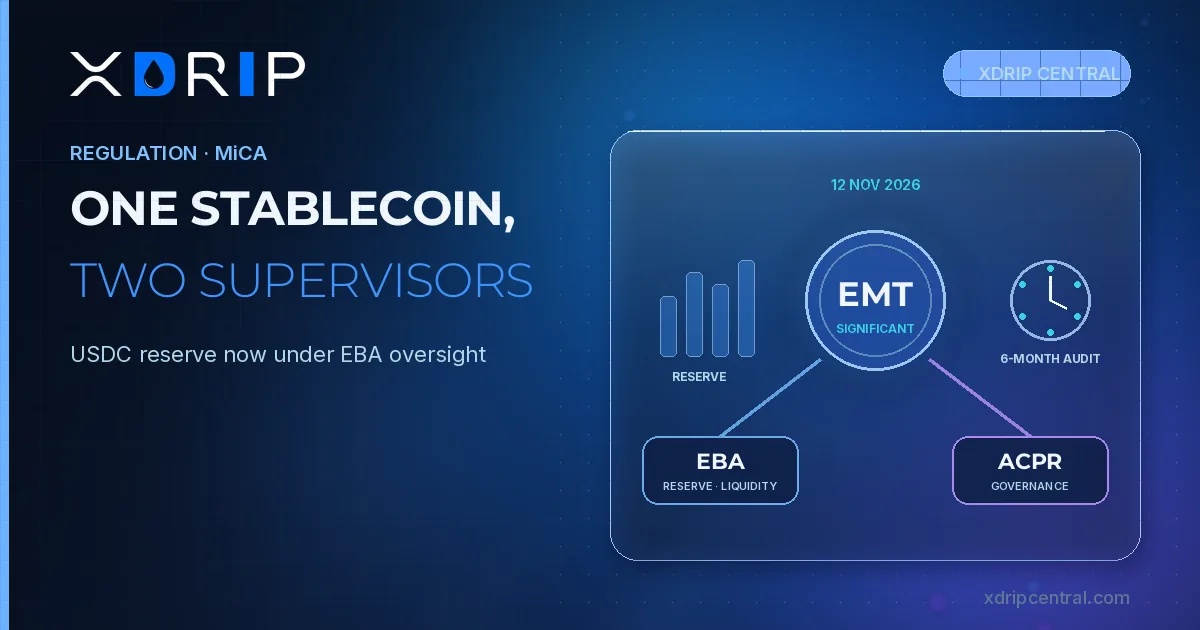
From 12 November the EBA directly supervises USDC's reserve, own funds and liquidity under MiCA. What changes, what stays with France's ACPR, what is unknown.
NewsNov 4, 20265 min
Signing and finality lessons on Central, backup guidance on xdrip.io, open firmware on Xdripia Waves and two new Seventh Amulet Dev Logs.