Our universe, in focus
Our Socials
We share highlights from XDRIP Digital Management LLC, Xecho, XColdPro, Arcadian Pixels, Xdripia Waves, and Tales of Xdripia. We bring you short summaries, with every original post one click away.
 Xecho
Keep sample clearance paperwork with your masters
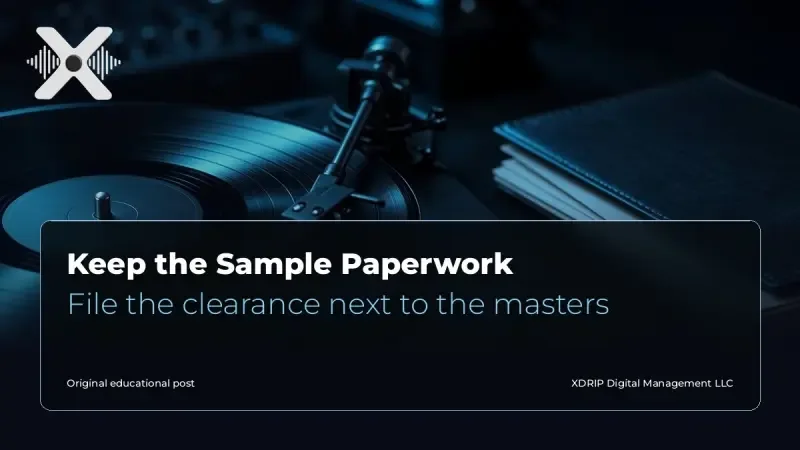
If your track uses a sample, we keep the clearance paperwork with the song files: the license, the email thread, the invoice. Distributors and platforms can ask for proof long after release, and a takedown is easier to answer when the documents sit next to the masters. No paperwork for a sample already released? Reach out to the rights holder now rather than later.
If your track uses a sample, we keep the clearance paperwork with the song files: the license, the email thread, the invoice. Distributors and platforms can ask for proof long after release, and a takedown is easier to answer when the documents sit next to the masters. No paperwork for a sample already released? Reach out to the rights holder now rather than later.
If your track uses a sample, we keep the clearance paperwork with the song files: the license, the email thread, the invoice. Distributors and platforms can ask for proof long after release, and a takedown is easier to answer when the documents sit next to the masters. No paperwork for a sample already released? Reach out to the rights holder now rather than later.
View on XXechoFeature for a Friend? Put the Deal in Writing First
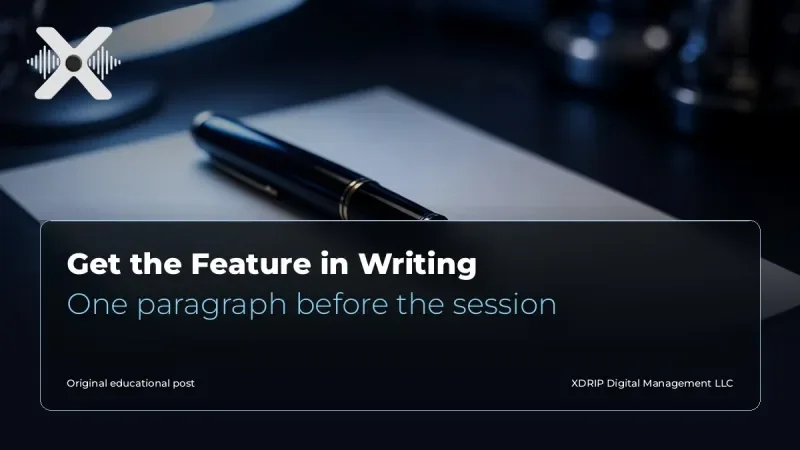
Doing a feature for a friend? Put the deal in writing before the session, even if it's one paragraph in an email. Write down the fee if there is one, the songwriting split, how you'll be credited, and whether they can use your name in promotion. It takes ten minutes, and you'll both be glad it exists when the song comes out.
Doing a feature for a friend? Put the deal in writing before the session, even if it's one paragraph in an email. Write down the fee if there is one, the songwriting split, how you'll be credited, and whether they can use your name in promotion. It takes ten minutes, and you'll both be glad it exists when the song comes out.
Doing a feature for a friend? Put the deal in writing before the session, even if it's one paragraph in an email. Write down the fee if there is one, the songwriting split, how you'll be credited, and whether they can use your name in promotion. It takes ten minutes, and you'll both be glad it exists when the song comes out.
View on XXechoPaid Radio Airplay: Ask How It Will Be Disclosed
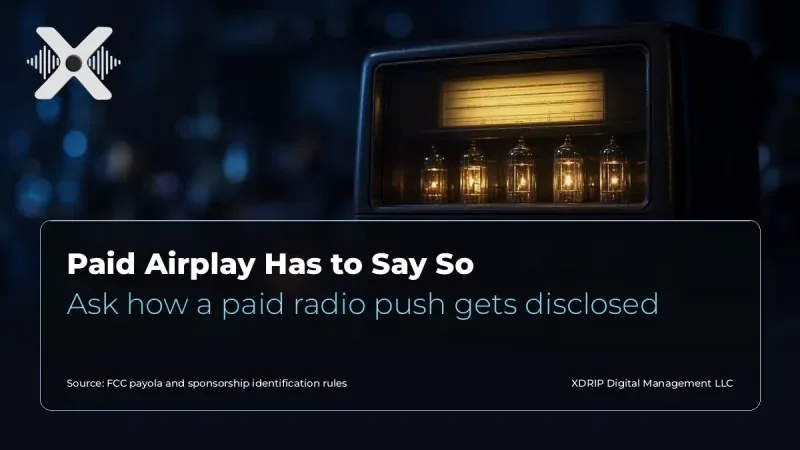
If someone offers to get your song on the radio for a fee, ask how it will be disclosed. In the US, the FCC requires broadcast stations to announce when airplay was paid for and who paid. Payments slipped to someone at a station without that disclosure are commonly called payola. Paid promotion can be legitimate — make sure it's in writing and out in the open.
If someone offers to get your song on the radio for a fee, ask how it will be disclosed. In the US, the FCC requires broadcast stations to announce when airplay was paid for and who paid. Payments slipped to someone at a station without that disclosure are commonly called payola. Paid promotion can be legitimate — make sure it's in writing and out in the open.
If someone offers to get your song on the radio for a fee, ask how it will be disclosed. In the US, the FCC requires broadcast stations to announce when airplay was paid for and who paid. Payments slipped to someone at a station without that disclosure are commonly called payola. Paid promotion can be legitimate — make sure it's in writing and out in the open.
View on XXechoBuild an Email List: Platform Followers Can Disappear Overnight
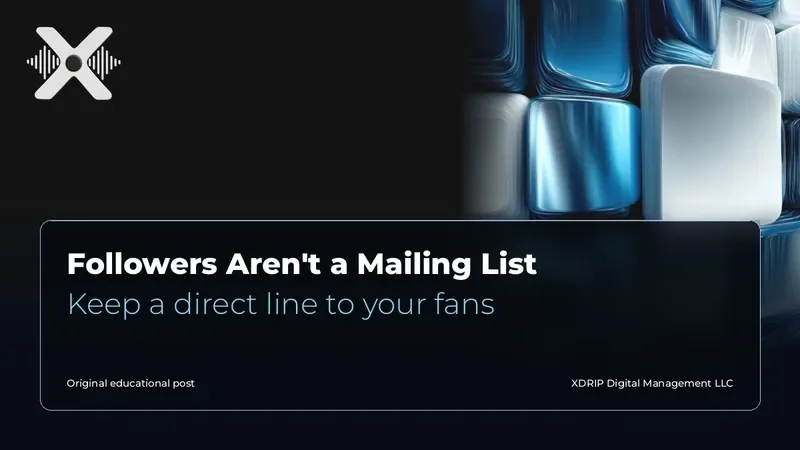
Followers on a platform live by the platform's rules. If an account gets locked or hacked, or the reach drops, that audience can disappear overnight. An email list is different: it's a direct line to the people who want to hear from you, and you can take it anywhere. We suggest putting a signup somewhere people already find you.
Followers on a platform live by the platform's rules. If an account gets locked or hacked, or the reach drops, that audience can disappear overnight. An email list is different: it's a direct line to the people who want to hear from you, and you can take it anywhere. We suggest putting a signup somewhere people already find you.
Followers on a platform live by the platform's rules. If an account gets locked or hacked, or the reach drops, that audience can disappear overnight. An email list is different: it's a direct line to the people who want to hear from you, and you can take it anywhere. We suggest putting a signup somewhere people already find you.
View on XXechoSearch Your Artist Name Before Your Next Release
Before your next release, we suggest searching your artist name on the big streaming services. If someone else already uses it, your song can land on their profile, or theirs on yours, and untangling that after release takes time. If there's a match, give your distributor the link to your existing artist profile when you upload, or pick a version of your name nobody else is using.
Before your next release, we suggest searching your artist name on the big streaming services. If someone else already uses it, your song can land on their profile, or theirs on yours, and untangling that after release takes time. If there's a match, give your distributor the link to your existing artist profile when you upload, or pick a version of your name nobody else is using.
Before your next release, we suggest searching your artist name on the big streaming services. If someone else already uses it, your song can land on their profile, or theirs on yours, and untangling that after release takes time. If there's a match, give your distributor the link to your existing artist profile when you upload, or pick a version of your name nobody else is using.
View on XXechoSpotify's Upcoming AI Covers and Remixes Tool: What Artists Should Ask
Spotify says its upcoming AI covers and remixes tool will be a paid add-on for Premium, that participating artists choose to opt in, and that streams of those remixes pay royalties to the artists and rights holders behind the originals. Reports say it's aimed at early 2027, but Spotify hasn't announced a date, a price or royalty rates yet. If your distributor asks you to opt in, we suggest asking how your share is calculated and whether you can leave later.
Spotify says its upcoming AI covers and remixes tool will be a paid add-on for Premium, that participating artists choose to opt in, and that streams of those remixes pay royalties to the artists and rights holders behind the originals. Reports say it's aimed at early 2027, but Spotify hasn't announced a date, a price or royalty rates yet. If your distributor asks you to opt in, we suggest asking how your share is calculated and whether you can leave later.
Spotify says its upcoming AI covers and remixes tool will be a paid add-on for Premium, that participating artists choose to opt in, and that streams of those remixes pay royalties to the artists and rights holders behind the originals. Reports say it's aimed at early 2027, but Spotify hasn't announced a date, a price or royalty rates yet. If your distributor asks you to opt in, we suggest asking how your share is calculated and whether you can leave later.
View on XXechoBack Up the Session, Not Just the Song
We reminded artists to keep the stems and project files, not just the final mix. Those are what you need for a remix, a sync request that wants an instrumental, or a fix years from now, and if they live on one laptop, one spilled coffee can take them. Our advice: keep two copies in two different places, labelled so you can find a song by name in a year.
We reminded artists to keep the stems and project files, not just the final mix. Those are what you need for a remix, a sync request that wants an instrumental, or a fix years from now, and if they live on one laptop, one spilled coffee can take them. Our advice: keep two copies in two different places, labelled so you can find a song by name in a year.
We reminded artists to keep the stems and project files, not just the final mix. Those are what you need for a remix, a sync request that wants an instrumental, or a fix years from now, and if they live on one laptop, one spilled coffee can take them. Our advice: keep two copies in two different places, labelled so you can find a song by name in a year.
View on XXechoThe Royalty You Might Be Missing
We pointed self-published songwriters to a royalty stream they might be missing. In the US, streaming and download services pay mechanical royalties for the songwriting side through The MLC, and self-administered songwriters can join as members, register their songs and get paid monthly. It is separate from your PRO and from SoundExchange, so being registered with one doesn't cover the others.
We pointed self-published songwriters to a royalty stream they might be missing. In the US, streaming and download services pay mechanical royalties for the songwriting side through The MLC, and self-administered songwriters can join as members, register their songs and get paid monthly. It is separate from your PRO and from SoundExchange, so being registered with one doesn't cover the others.
We pointed self-published songwriters to a royalty stream they might be missing. In the US, streaming and download services pay mechanical royalties for the songwriting side through The MLC, and self-administered songwriters can join as members, register their songs and get paid monthly. It is separate from your PRO and from SoundExchange, so being registered with one doesn't cover the others.
View on XXechoSplit Sheets Before Everyone Leaves
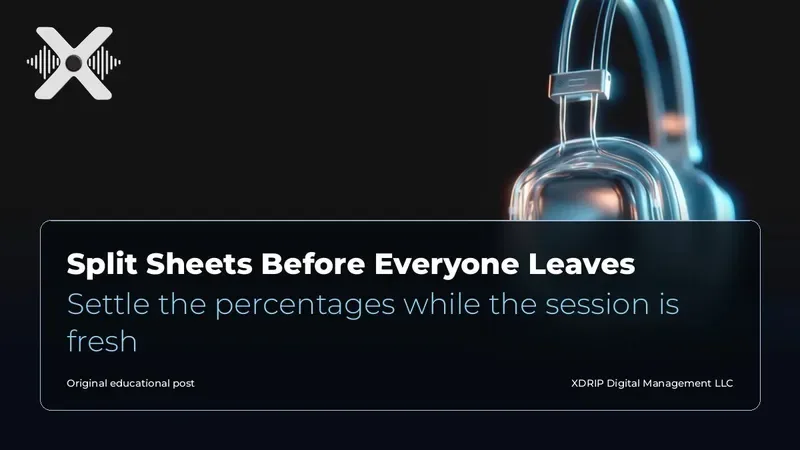
We shared why the best time to agree on songwriting splits is before anyone leaves the room. A split sheet lists the song title, everyone who wrote on it, each person's percentage, and their contact and publishing details, and everyone signs it the same day. It feels awkward for a couple of minutes, but sorting it out after a song takes off is much worse, and royalties can sit unpaid while people argue.
We shared why the best time to agree on songwriting splits is before anyone leaves the room. A split sheet lists the song title, everyone who wrote on it, each person's percentage, and their contact and publishing details, and everyone signs it the same day. It feels awkward for a couple of minutes, but sorting it out after a song takes off is much worse, and royalties can sit unpaid while people argue.
We shared why the best time to agree on songwriting splits is before anyone leaves the room. A split sheet lists the song title, everyone who wrote on it, each person's percentage, and their contact and publishing details, and everyone signs it the same day. It feels awkward for a couple of minutes, but sorting it out after a song takes off is much worse, and royalties can sit unpaid while people argue.
View on XXechoRead the Lease Before the Drop: Beat Leases Usually Aren't Ownership
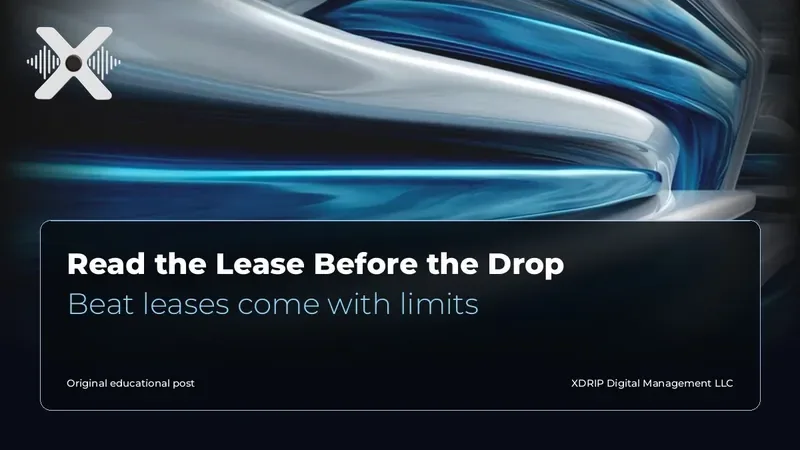
We explained that leasing a beat online is a fast way to start a song, but it usually isn't ownership. Many leases are non-exclusive, so the producer can sell the same beat to other artists, and many cap streams or sales; go past the cap and you may need to upgrade the license. We recommend reading the terms, saving a copy with your files, and knowing where your limit sits before the song takes off.
We explained that leasing a beat online is a fast way to start a song, but it usually isn't ownership. Many leases are non-exclusive, so the producer can sell the same beat to other artists, and many cap streams or sales; go past the cap and you may need to upgrade the license. We recommend reading the terms, saving a copy with your files, and knowing where your limit sits before the song takes off.
We explained that leasing a beat online is a fast way to start a song, but it usually isn't ownership. Many leases are non-exclusive, so the producer can sell the same beat to other artists, and many cap streams or sales; go past the cap and you may need to upgrade the license. We recommend reading the terms, saving a copy with your files, and knowing where your limit sits before the song takes off.
View on XXechoTwo Licenses, One Placement: Sync and Master Use Explained
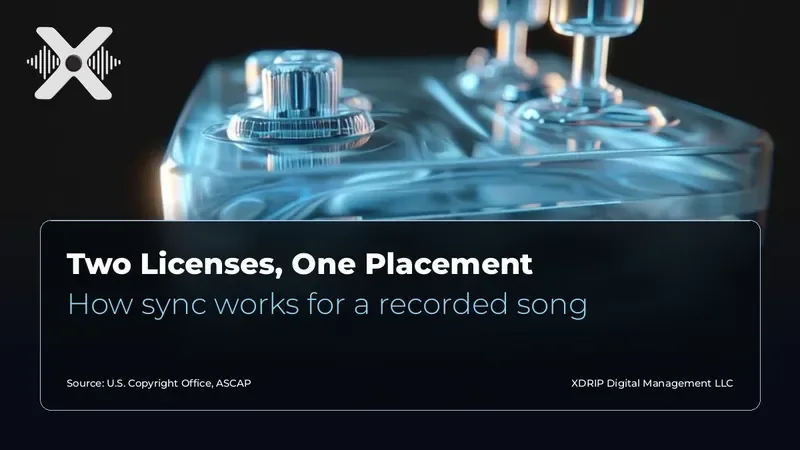
We explained that getting a recorded song into a film, show, ad or game usually takes two permissions. A sync license covers the composition, the words and melody, and comes from whoever controls the publishing; a master use license covers the recording itself and comes from whoever owns the master. If you wrote it, recorded it and own both, you can say yes to both, so we suggest knowing which side you control before an offer shows up.
We explained that getting a recorded song into a film, show, ad or game usually takes two permissions. A sync license covers the composition, the words and melody, and comes from whoever controls the publishing; a master use license covers the recording itself and comes from whoever owns the master. If you wrote it, recorded it and own both, you can say yes to both, so we suggest knowing which side you control before an offer shows up.
We explained that getting a recorded song into a film, show, ad or game usually takes two permissions. A sync license covers the composition, the words and melody, and comes from whoever controls the publishing; a master use license covers the recording itself and comes from whoever owns the master. If you wrote it, recorded it and own both, you can say yes to both, so we suggest knowing which side you control before an offer shows up.
View on XXechoEvery Recording Gets a Number: Why Your Releases Need an ISRC
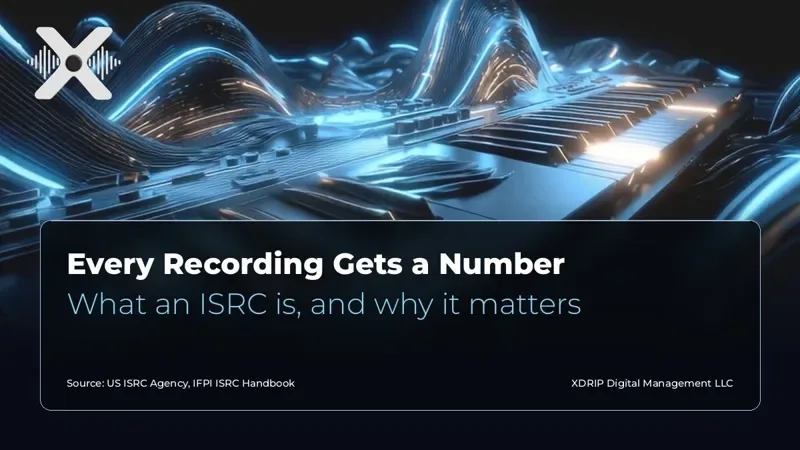
We explained why every recording you release should have an ISRC, a 12-character code that identifies that specific recording wherever it goes, from downloads to streams. It identifies the recording, not the song, so a remix or a new version gets its own code. Music services and licensing companies use ISRCs to match tracks, so we suggest keeping a list of yours alongside your masters and split sheets.
We explained why every recording you release should have an ISRC, a 12-character code that identifies that specific recording wherever it goes, from downloads to streams. It identifies the recording, not the song, so a remix or a new version gets its own code. Music services and licensing companies use ISRCs to match tracks, so we suggest keeping a list of yours alongside your masters and split sheets.
We explained why every recording you release should have an ISRC, a 12-character code that identifies that specific recording wherever it goes, from downloads to streams. It identifies the recording, not the song, so a remix or a new version gets its own code. Music services and licensing companies use ISRCs to match tracks, so we suggest keeping a list of yours alongside your masters and split sheets.
View on X