
Sicurezza20 nov 20265 min
sBOLD Vault Drained Through a Leftover Swap Approval
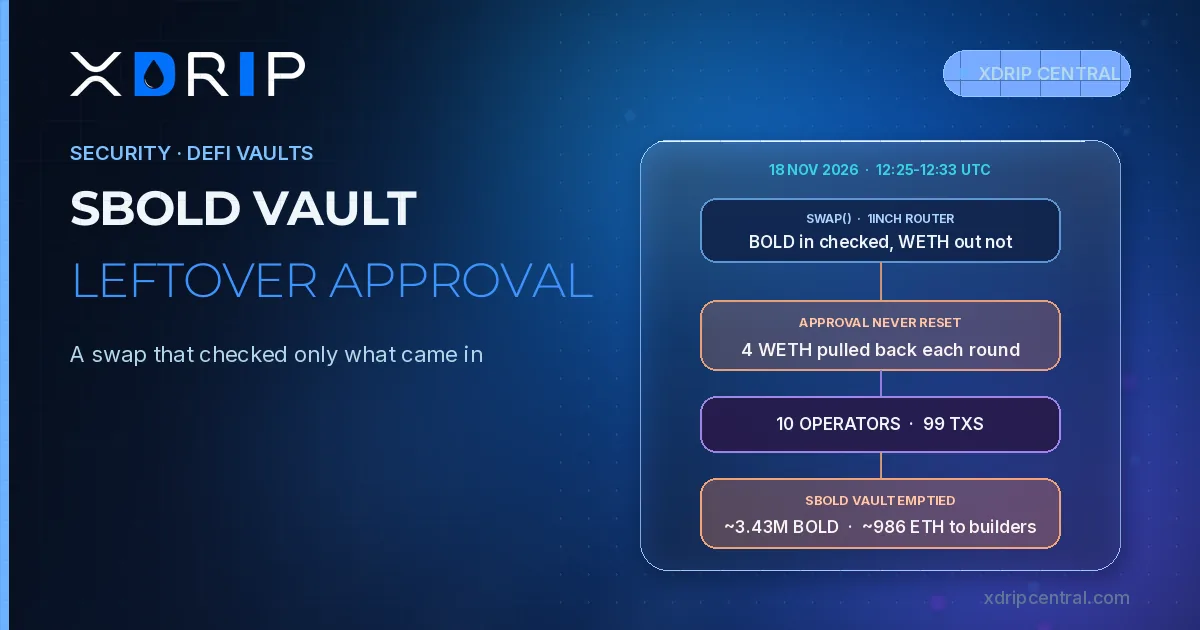
K3 Capital's sBOLD vault lost about 3.43M BOLD after a swap check ignored the collateral side and left an approval open. What we know and what is unclear.
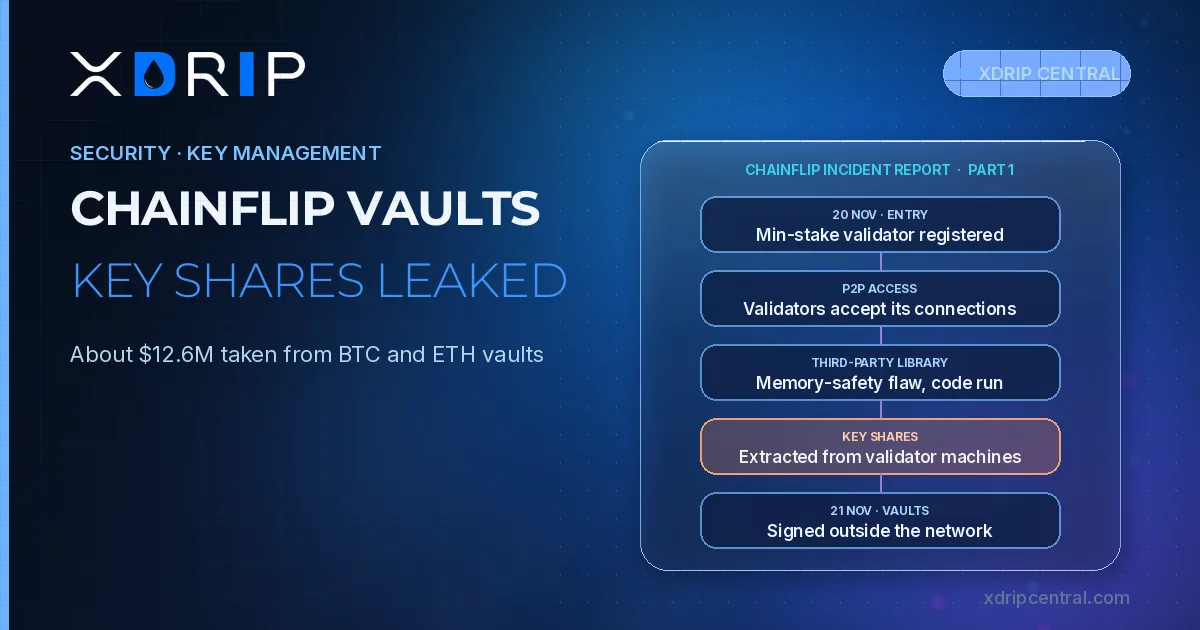
On 23 November 2026 Chainflip Labs published the first part of its incident report on the theft from the Chainflip Bitcoin and Ethereum vaults two days earlier. It explains how the attacker obtained vault signing power without ever joining the signing set, and leaves several questions open.
According to the report, the attacker took 133.34425053 BTC from the Bitcoin vault in two transactions, and 520.2243399 ETH, 3,249,631.41 USDC and 758,141.33 USDT from the Ethereum vault in a single transaction. Chainflip values the total at about $12.6 million at prices on the morning of 21 November and says this was effectively the entire balance of both vaults. All three transactions carried valid vault signatures that the protocol never requested.
Chainflip vaults are controlled by a threshold key held as shares by the active validators. The report describes the path to those shares in three steps:
Chainflip notes that the investigation is continuing and that some steps of this account are not yet fully confirmed.
The first BTC left the vault at 06:41 UTC on 21 November. An automated warning reached an internal channel eight minutes later, but that monitor was still on trial after false positives and not wired to escalation. The Ethereum vault was drained at 07:10 UTC. The alarm was raised by a team member at 07:41 UTC. Governance forced a key rotation that completed at 08:21 UTC, and swaps, deposits and withdrawals were paused by 08:31 UTC.
Rotation did not close every door. At 11:24 UTC a further 10.48 BTC that was still in the vault and reachable with the stolen key was taken. A patched release went to operators that evening, a second rotation followed on 22 November, and by 11:31 UTC on 23 November every active validator was running it.
Swaps, deposits and withdrawals remain paused. The stablecoins were swapped to ETH and 2,909 ETH went into Tornado Cash within minutes. Chainflip offered the attacker a 10% bounty for returning 90% of the assets by 18:38 UTC on 23 November. Reporting after the deadline found no funds returned. When we checked public block explorer data on the morning of 24 November, the two addresses holding the stolen BTC showed no outgoing transactions and the BTC return address had received nothing.
Free LP balances on unaffected chains have been returned to refund addresses. Chainflip has not yet said how losses will be allocated or when service will resume. Coverage notes this is the protocol's second loss in about ten weeks, after a smaller USDT incident on its Tron integration in September.
The report does not name the networking library or say whether other projects use it. Nor does it say how many shares were extracted or how many validators were affected. A further report on recovery and user treatment has been promised.
Nothing in the report points to a break in the vault cryptography. The weak points were around it: a permissionless step that gave an unvetted node a network path to the machines holding key shares, a memory-unsafe dependency on that path, and an alert that existed but could not trigger action. For any threshold-signing design, how and where shares are stored, who is allowed to connect to the nodes that hold them, and whether every alert can reach a human in minutes, matter as much as the scheme itself.
Sources: Chainflip Labs incident report (Part 1) and message to the attacker; The Crypto Times; CryptoSlate; BTC Pulse; mempool.space address data.
Sicurezza20 nov 20265 min
K3 Capital's sBOLD vault lost about 3.43M BOLD after a swap check ignored the collateral side and left an approval open. What we know and what is unclear.
Sicurezza19 nov 20265 min
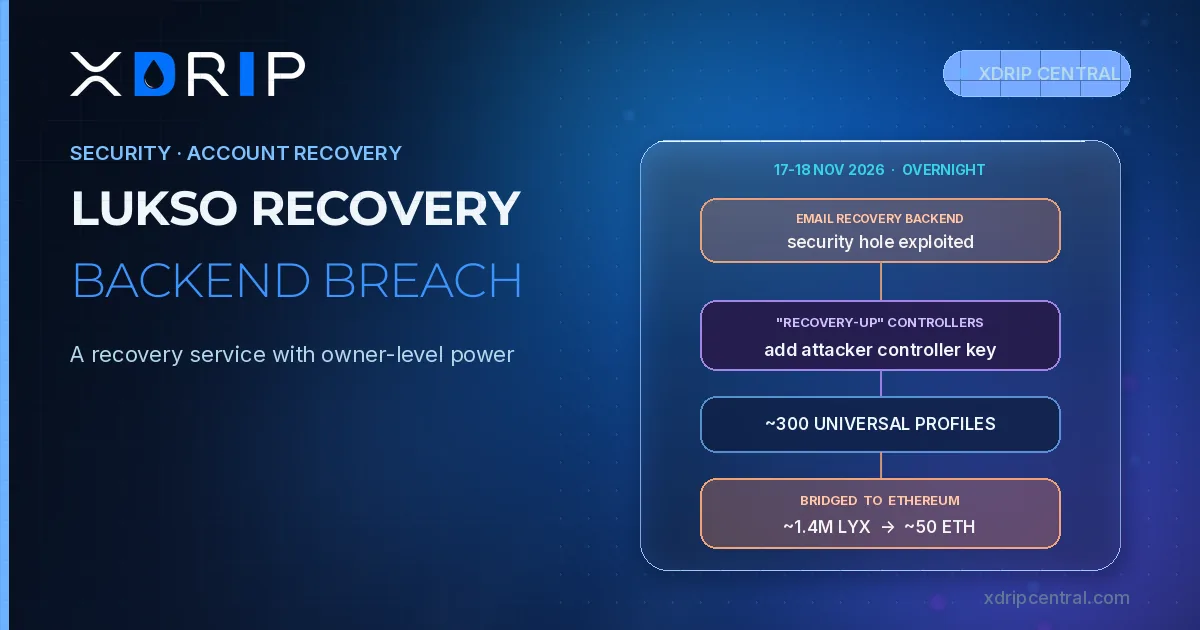
An attacker abused LUKSO's email recovery backend to add a controller key to about 300 Universal Profiles and take 1.4M LYX. What we know so far.
Sicurezza18 nov 20264 min
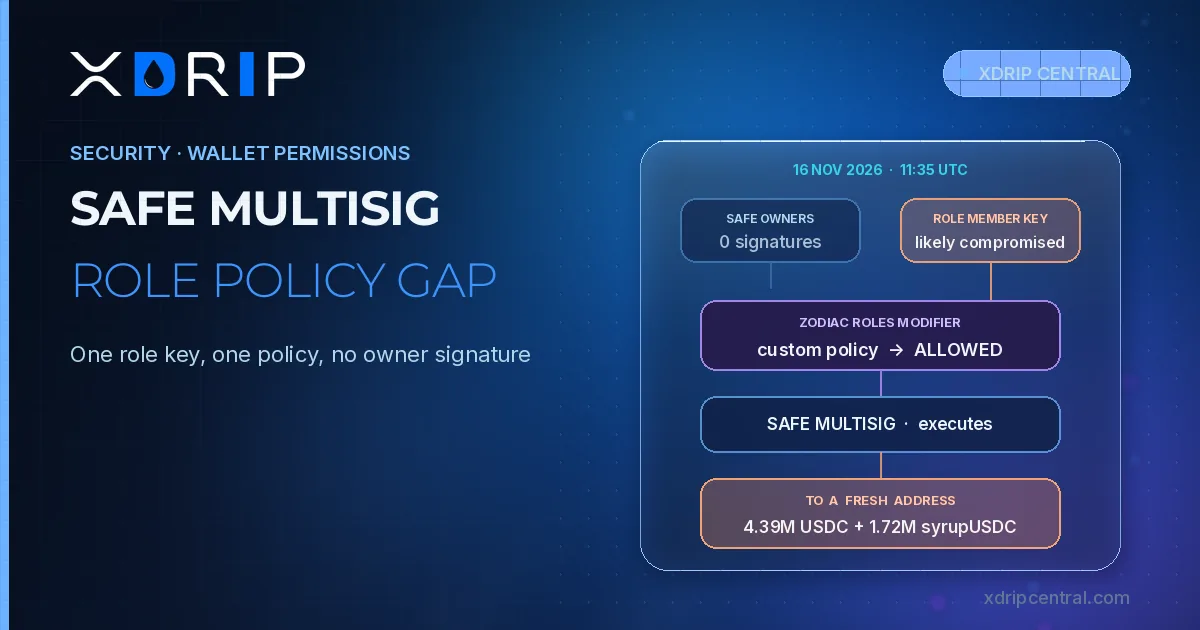
A likely compromised role key moved 4.39M USDC and 1.72M syrupUSDC out of a Safe multisig via a Zodiac Roles policy, with no owner signature. What we know.